
Bi-Phobia: How My Experience Pushed Me to Invest in Myself and My Community

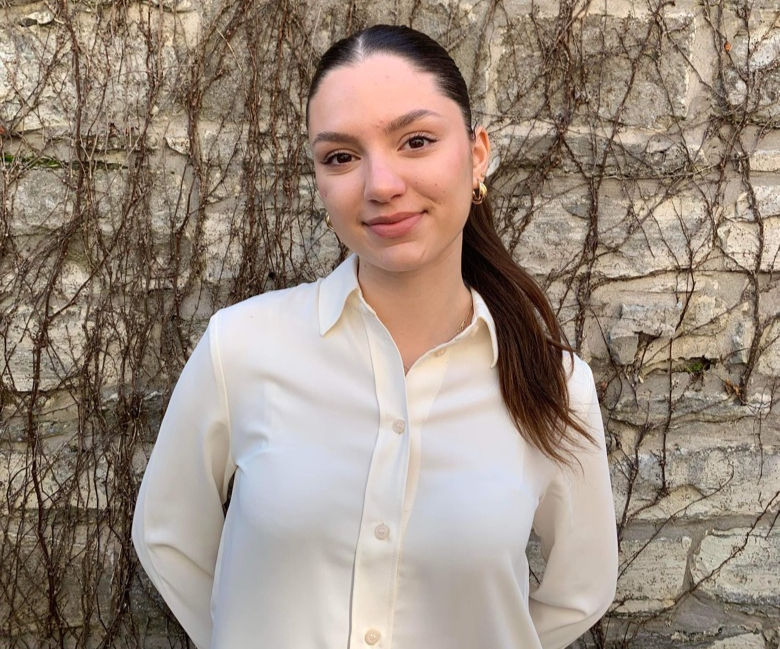
Written by: Julia Patterson
For an identity label that has seen a rise in popularity, bisexuality feels so misunderstood. I say this as someone who has taken up space in both very heteronormative and queer domains, respectively. It seems that in either one of these spaces, my sexuality is interpreted and subsequently projected back on to me according to the other person’s biased attitudes about bisexuality.
This summer I read an arguably controversial take by a bisexual blogger named Emma Lindsay called, “In Defense of Bi-Phobia” (bare with me). Lindsay delves into her perception of how traditional Western gender norms inform peoples’ interpretation of her sexuality, and the dating experience of bisexual people. If you keep an open-mind, it’s an insightful piece that unearths the root of peoples’ biphobia— spoiler alert: it’s the patriarchy.
One of my takeaways from her article was her acknowledgement of the “secondary benefits” that come with dating men. These secondary benefits are positive feelings that arise out of heteronormative conformity. In my experience, these secondary benefits of dating men have been the general approval of other people regarding myself and my relationship. Whether it be with family, co-workers, classmates, or certain friends, I have found it difficult to talk openly about love and relationships when the subject is a woman compared to a man.
This is because my experiences with men tend to be more palatable by most people in my life, whereas speaking about women brings up uncomfortable emotions on both ends. What I find interesting is that the exact opposite tends to be true in queer spaces. There are queer people who I believe would prefer to see me with a woman. I can also think of instances where I have been nervous to reveal that I have also dated men. So, in this case, the “secondary benefits” of being with women are an uproar of support from queer friends and the community. Basically, no matter who you are dating it can feel as though you’re always disappointing someone.
Perhaps other people won’t relate as strongly to the feeling of disappointing other people (I am a recovering people pleaser :D). But the feeling of being half a part of both straight and queer groups, yet not fully belonging to either is canon for many bisexuals. Once I realized that I felt doubly left out of both spaces in some capacity, I was motivated to make two changes in my life: 1) to stop looking at other people to validate my sexuality, 2) to create stronger community ties.
1) Stop looking to other people for validation.
Similarly to Lindsay's recount of her experience, once you come to accept yourself, other people’s interpretations of your sexuality lose their power over you. I’ve come to realize that no matter who the judgement is being passed by, bi-phobia is a reflection of other people’s insecurities, close-mindedness, and the limitations that they set for themselves. On my own, I experience no confusion or discomfort in who I am. In fact, I think my sexuality speaks to my capacity to love people deeply for who they are— something I’m proud of.
To be bisexual is not to be half of one thing and the rest of the other. I am entirely whole. Though, the purpose of this article is not to explain bisexuality, nor myself. Rather, I hope that if you take anything away from this article, it is an inspiration to let other people be confused by you. As I get older that is something I’m trying to embrace, because it sounds a lot less exhausting than constantly explaining myself until I’m fully understood. That is a lesson that started with accepting my sexuality and has spread to the many other areas of my life. Thus, it can be applicable to anyone’s experience.
2) Find your community!
I am lucky enough to have been surrounded by accepting friends for really my whole life. But I will say that having support is not quite the same as having a community. I believe that holds true for everyone, whether you are a part of the queer community or not. Having parts of you seen by other people with a shared experience is invaluable. I met our co-chair, Anran Wang, a couple of years ago and she has transformed my life in multiple ways. One of them is by introducing me to her world of queer people! That sounds silly, but somehow it is true lol. Anran has a particular talent for bringing people together, which is a direct reflection of the beautiful person that she is. This is to say, it just takes meeting one person to find your community. I am so thankful for the family that herself, and co-chair Misha Chopra, have fostered through Q+.
Outside of the club, I have also made an effort to converse with other bisexual people, which has been both affirming and eye opening. Specifically, through hearing about other peoples’ experiences, I have been able to better understand all the many forms that bisexuality can take.
While my reflection on bisexuality in this article was pessimistic at times, I have immense gratitude for the freedom to express myself— simply having the space to complain feels like a privilege in itself. Writing this blog, and even being a part of Q+, is something that a younger version of myself would not have had the confidence to do. So, this feels like a full circle moment for me, and a nod to my younger self. What a fitting way to wrap up my time at university.


Comments